Cervical cancer is the abnormal cell growth or proliferation cell of any part of the cervix or on the wall of the cervix.
🤔Etiology/Causes:
Cancer is an idiopathic disease, it has not any particular or proper causes but most cervical cancer is caused by HPV (Human Papillomavirus) virus. HPV spread through sectual contact, multiple sex partner & unprotedcted sex.
⚠️Risk Factors:
Some common risk factors of the cancer of cervix are described bellow:
⇢Age – Old age person above 60 to 70 years are more prone to Cervical Cancer.⇢Chewing Tobacco – Chewing tobacco is a very bad habit that is not only a worst causes for Cervical Cancer but also for any other disease.
⇢Drinking Alcohol – Drinking alcohol is a risk factor for cancer.
⇢Multiple Sex Partner – Multiple sex partner and unprodected sex can causes Cervical Cancer.
⇢Family History – A past family history with Cervical cancer is a risk factor.
⇢Use sudden medication – Some type of medication and their side effects can leads to Cervical cancer.
⇢Nutritional deficiencies – Person with some nutritional deficiency may have the chances of Cervical cancer.
🤧Sign and Symptoms/ Clinical Manifestation:
Some common signs and symptoms that a woman may face during cervical cancer are:
Unusual vaginal bleeding
Painful sex
Unpleasant vaginal smell
Bleeding after menopause
Irregular menstrual
Leg pain
Back pain
Pelvic pain
Weight loss
Fatigue
Painful Urination
Blood in urine
Urinary Incontinence(UI)
∞Stages:
Cancer of cervix or Cervical cancer stages are following:
▲Stage 0/Stage I: You have a single tumor in your Cervix.
▲Stage II: You have 2 or 3 tumors and it will be bigger in size than the first stage. The tumor may have spread to your blood vessels.
▲Stage III: In this stage, The tumor may have spread to your lymph nodes, large blood vessels or another organ.
▲Stage IV/Last Stage: In the last stage the cancer will spread to other organs in your body, such as your lungs or bones, as well as lymph nodes.
Medical Surgical Nursing 1 Previous Year Short Question with Answer
Fill in the blanks:
1. Normal level of potassium in the blood is _____________
➡3.6 to 5.2 (mmol/L)
2. Presence of protein in the urine is called as ______________
➡Proteinuria
3. Difficulty in swallowing is called as ________________
➡Dysphagia
4. Abnormal accumulation of fluid in the peritoneal cavity is called as _______________
➡Ascites
5. __________ is the inflammation of the Gums
➡ Gangivitis
6. Decrease level of potassium in the blood is called as __________
➡Hypokalemia
7. __________ is Inflammation of the gall bladder
➡Cholecystitis
8. ______________is a sudden temporary loss of consciousness
➡Syncope / Fainting
9. Presence of protein in urine is called as ___________
➡ Proteinuria
10. Incrcase in serum sodium level is called __________
➡ Hypernatremia
11. Difficulty in swallowing is called __________
➡ Dysphagia
12. _________ position will be an ideal for perineal and rectal surgeries
➡ Lithotomy
13. Otoscope is used to examine________________
➡ Ear
14. Rheumatoid arthritis mainly affects________________
➡ Joint
15. An example for Autoimmune disease is________________
➡ Systemic Lupus Erythematosus
16. Collapse of the lung is called as ___________
➡ Pneumothorax
17. Decrease in the number of platelets is known as ____________
➡ Thrombocytopenia
18. Normal level of Sodium in blood is _________
➡ 135-145 mEq/L
19. Epistaxis means __________
➡ Nose bleeding
20. Yellowish discolouration of the skin is found in________________
➡ Jaudice
21. The following instrument is used for the examination of eye________________
➡ Ophthalmoscopy
22. Salt is restricted to the patient with________________
➡ Hypertension
23. Normal serum calcium level is ____________
➡ 8.5 to 10.5 mg/dl
24. Instrument used to check reflex is ___________
➡ Reflex hammer
25. Spinal anaesthesia is a type of __________ anaesthesia
➡ Regional Anaesthesia
26. Antibody mediated immunity is also called as __________
➡Humoral immunity
27. The first cranial nerve is________________
➡Olfactory
28. The procedure used to visualise internal organs is________________
➡Endoscope
29. Blood in the sputum is termed as________________
➡Haemoptysis
30. Deceased potassium level in the blood is called _________
➡ Hypokalemia
31. Inflammation of the lining of the stomach is called _________
➡ Gastritis
32. Inflammation of the nose is called _________
➡ Rhinitis
33. An artificial device used to replace a missing body part such as a limb or heart valve is ___________
➡ Prosthesis
34. Master gland of the body is________________
➡ Pituitary gland
35. Total number of cranial nerves are________________
➡ 12 pairs
36. Position used for surgeries on the spinal cord ________________
➡ Prone
37. An abnormal connection between the organ is called as ___________
➡ Fistula
38. Paracetamol is a _____________ drug
➡ Antipyretic
39. Inflammation of the gall bladder is called _____________
➡ Cholecystitis
40. Normal concentration of potassium in serum is ___________
➡ 3.5 to 5.5 mEq/L
41. Decreased pulse rate is termed as ________________
➡ Bradycardia
42. HS means ________________
➡ At Bedtime
43. Gastric juice contain ________________
➡ Pepsin lipase and Renin
44. An abnormal decrease in the number of platelets is called ____________
➡ Thrombocytopenia
45. Inflammation of the lung parenchyma is termed as ____________
➡ Pneumonitis
46. The action of paracetamol drug is ____________
➡ Analgesic and antipyretic drug
47. ____________ position is ideal for perineal and rectal surgeries
➡ Lithotomy
48. Decreased potassium level in blood is termed as ________________
➡ Hypokalaemia
49. Salt is restricted to a patient with ________________
➡ Oedema
50. Drug used in Epilepsy is ________________
➡ Eptoin
51. __________ is the enlargement of the Liver
➡ Hepatomegaly
52. Decreased sodium level in the body is called as ________
➡ Hyponatremia
53. Tuberculosis is caused by _________
➡ Mycobacterium tuberculosis
54. ___________ is the Increase of the number of cells resulting from increased cellular division
➡ Proliferation
55. ___________ is the inflammation of the gums
➡ Gangivitis
56. Decrease secretion of antidiuretic hormone causes _________
➡ Diabetes insipidus
57. Antidote of Heparin is ________________
➡ Protamine sulphate
58. The following chemical is used for fumigation of operation theatre ________________
➡ Formaldehyde
59. The following instrument is used for the examination of Bladder ________________
➡ Cystoscope
60. Normal pH of blood is ___________
➡ 7.35 to 7.45
61. Collection of pus in pleural cavity is called __________
➡ Empyema
62. Collapse of lungs is called as ____________
➡ Pneumothorax
63. An abnormal decrease in the number of platelets of platelets is called _____________
➡ Thrombocytopenia
64. Senior citizen’s day is celebrated on ____________
➡ August 21
65. Dyspnoea is released in ________ position
➡ Upright position
66. Fat consumption in elderly should be ___________
➡ 20-35% of their daily calories
65. Pain is _________ vital sign
➡ 5th
66. Normal value of calcium is ____________
➡ 8.6 to 10.3 mg/dL
67. Suture materials used for tendons __________
➡ Catgut
68. The first India Medical Physician is ____________
➡ Anandi Bai Joshi
69. The normal BUN level is __________
➡ About 7 and 20 mg/dL
70. When the Lasix is administered to patient ___________ is given as a supplement
➡ Potassium
71. The purpose of post-operative deep breathing coughing exercises are to prevent _________
➡ Pneumonia
72. Decreased level of potassium in the blood is called as __________
➡ Hypokalemia
73. Disengagement theory explains about _________
➡ Ageing
74. Dyspnoea is relived in _________
➡ Upright position
75. Damage to the air sacs in the lungs is called as:
➡Emphysema.
76. Inflammation and infection of the salivary gland is known as:
➡Sialadenitis.
77. ___________ are abnormal enlarged veins in the lower part of the esophagus:
➡Esophageal varices.
78. Formation of stone in the gall bladder is known as:
➡ Cholelithiasis.
An abnormal cell growth that happens in the lung or any part of the lung is known as Lung Cancer.
🤔Etiology/Causes:
The causes of cancer are mostly unknown that is why cancer is called as an idiopathic disease. The most common risk factors of Lung Cancer are described below.
⚠️Risk Factors:
1. Smoking
Smoking can be the main cause of any type of cancer. Especially in Lung Cancer smoking releases bad chemicals which can cause cancer. Smoking burns the alveoli of the lungs and damages our lungs totally.
2. Past history of Cancer
Patients with any past history of cancer or lung cancer can again got Lung Cancer.
3. Asbestos
Asbestos exposure is a leading cause of lung cancer. Inhalation of asbestos fibers can lead to the development of cancerous cells in the lungs over time, posing a serious health risk to individuals who have been exposed to this harmful mineral.
4. Radon exposure
Radon exposure, a radioactive gas released from soil and rocks, is a leading cause of lung cancer. When inhaled, it decays and emits harmful particles that damage lung tissues, increasing the risk of cancer.
5. Passive Smoking
Passive smoking, or secondhand smoke exposure, is a known cause of lung cancer. When non-smokers inhale tobacco smoke from others, they’re at increased risk due to carcinogens present in the smoke, leading to the development of lung cancer.
6. Air pollution
Air pollution is a significant cause of lung cancer, as exposure to harmful airborne particles and toxins, such as fine particulate matter and carcinogens, can damage lung tissue and lead to cancerous growths.
7. Genetic Causes
Genetic causes of lung cancer involve specific mutations or alterations in the DNA that can increase the risk of developing the disease. These genetic changes may affect cell growth, division, and repair mechanisms, leading to uncontrolled cell growth and tumor formation in the lungs.
8. Lung disease
Lung cancer is primarily caused by various factors, including smoking, exposure to secondhand smoke, environmental pollutants like radon and asbestos, genetic predisposition, and pre-existing lung diseases like chronic obstructive pulmonary disease (COPD).
🤧Sign and Symptoms/ Clinical Manifestation:
1. Hemoptysis
Hemoptysis is a symptom of lung cancer characterized by coughing up blood or blood-stained sputum.
2. Chest pain
Chest pain can be a sign of lung cancer, typically resulting from the tumor pressing on surrounding tissues or nerves. It may also indicate advanced disease or metastasis. Early diagnosis and medical evaluation are crucial for appropriate treatment and management.
3. Shortness of breath
Shortness of breath is a common symptom of lung cancer, often caused by tumors obstructing the airways or fluid accumulation in the lungs, leading to reduced lung function and oxygen intake.
4. Fatigue, weight loss
Lung cancer may present with fatigue and unexplained weight loss as common signs and symptoms. These can occur due to the cancerous growth interfering with normal body functions, leading to energy depletion and metabolic changes.
5. Respiratory infection
Respiratory infection may present as a sign and symptom of lung cancer, causing persistent cough, wheezing, shortness of breath, and chest pain. It is crucial to differentiate between benign infections and potential malignancies to ensure timely diagnosis and appropriate treatment.
Stages:
Hepatocellular carcinoma or Liver cancer stages are following:
▲Stage 0/Stage I: You have a single tumor in your liver.
▲Stage II: You have 2 or 3 tumors and it will be bigger in size then the first stage.The tumor may have spread to your blood vessels.
▲Stage III: In this stage, The tumor may have spread to your lymph nodes, large blood vessels or another organ.
▲Stage IV/Last Stage: In the last stage the cancer will spread to other organs in your body, such as your lungs or bones, as well as lymph nodes.
🩺Diagnostic Evaluations:
1. History Collection
Take patient’s personal history and professional histories to find the causes of Lung Cancer
2. Physical Examination
Check the physical examination to find any signs and symptoms.
3. Chest X-ray
Do the chest x-ray to find the condition of your chest.
4. CT scan
CT scan is an imaging test to help a clear image of the lungs that can find actual problems and stages.
5. Biopsy
The biopsy will help to detect the presence of benign growth of a tumor.
6. Pulmonary Function Test
Pulmonary tests can show the capacity and strength of the lungs.
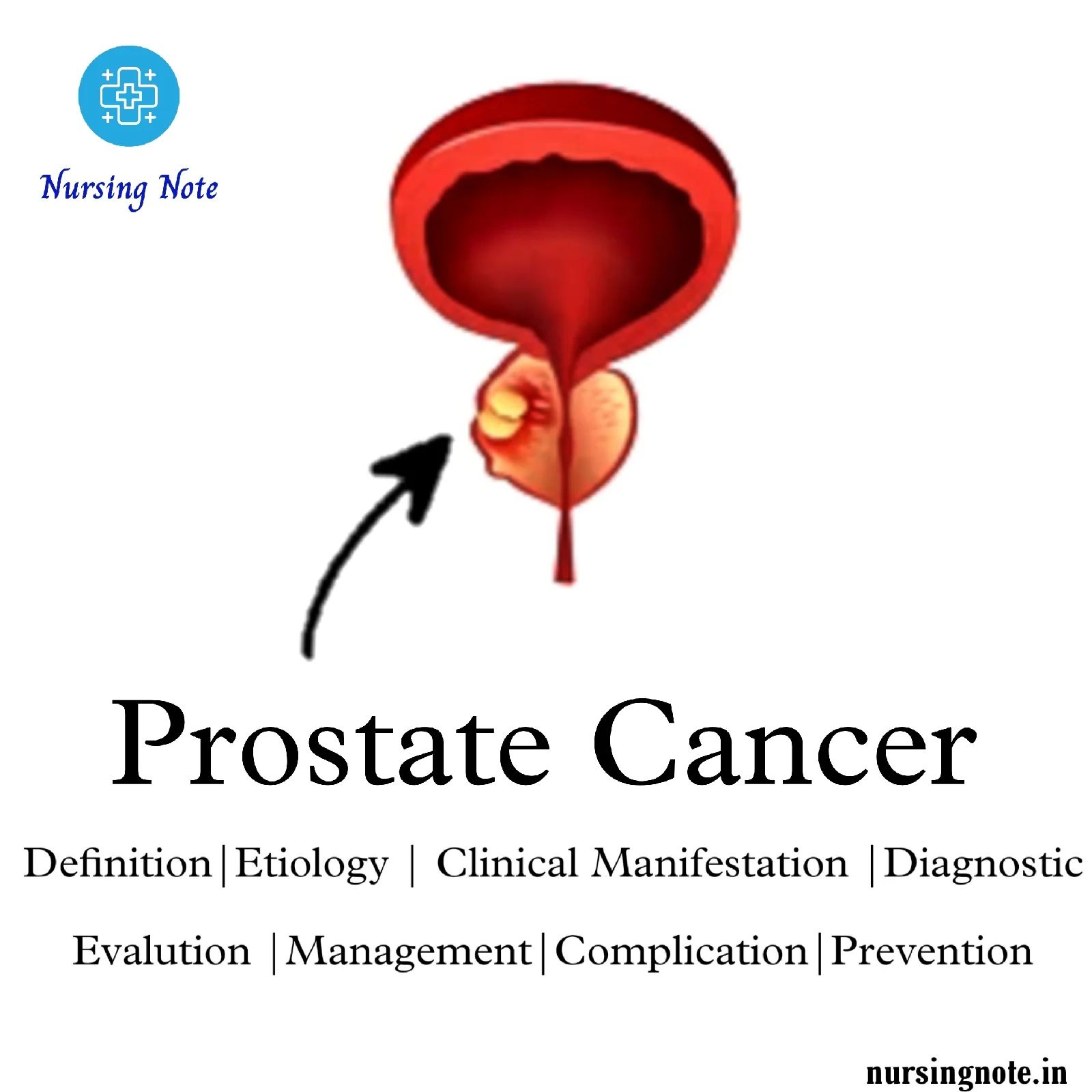
The prostate is a part of the male reproductive system which is present just below the bladder. Prostate Cancer is an abnormal cell division or cell of the prostate gland.
🤔Etiology/Cause:
There are not any particular reasons for any type of cancer. It basically happens due to the mutation of DNA in our cells. That is why cancer is called an idiopathic disease.
⚠️Risk Factors:
1. Older age
2. Black skin tone
3. Family history
4. Obesity
5. Low level of Vit. D.
6. Prostatitis: It is inflammation of the prostate gland
7. Elevated blood level of testosterone.
🤧Signs and Symptoms/ Clinical Manifestation:
1. Weak & Interrupted Urine Flow
2. Difficulty in passing urine.
3. Blood in Urine (Blood in urine)
4. Noctura
5. Dysuria
6. Pain in the pelvis
7. Lymphedema
Stages:
The stages of prostate cancer are the following:
▲Stage 0/Stage I: You have a single tumour in your prostate gland.
▲Stage II: You have 2 or 3 tumours and they will be bigger in size than the first stage. The tumour may have spread to your blood vessels.
▲Stage III: In this stage, The tumour may have spread to your lymph nodes, large blood vessels or another organ.
▲Stage IV/Last Stage: In the last stage the cancer will spread to other organs in your body, such as your lungs or bones, as well as lymph nodes.
🩺Diagnostic Evaluations:
1. History Collection: In history collection medical person or a nurse will check if there is any previous problem with the reproductive system.
2. Physical Examination: A nurse will check the physical condition of the person.
3. Digital Rectal Examination: In DRE a medical person inserts gloved and lubricated finger into the rectum.
4. MRI
5. CT Scan
6. Biopsy
🏥MANAGEMENT:
➦ Chemotherapy
➦ Hormone therapy
➦ Prospectomy
😖Complication:
➦ Hemorrhage
➦ Metastasis of cancer
➦ Erectile dysfunction
➦ Infection
➦ Sextual Disorder
🛡️Prevention:
➦ Stop smoking
➦ Take Healthy diet
➦ Maintain Healthy weight and exercise regularly
➦ Stop smoking
It’s defined as an abnormal or uncontrolled cell growth in any part of the larynx. It is also called Laryngeal Cancer.
🤔Etiology/Causes:
There are not any particular reasons for any types of cancer. It basically happens due to the mutation of DNA in our cells. That is why cancer is called an idiopathic disease.
⚠️Risk Factors:
Some common risk factors of the cancer of Larynx are described bellow:
⇢Age – Old age person above 60 to 70 years are more prone to Laryngeal Cancer.
⇢Chewing Tobacco – Chewing tobacco is a very bad habit that not only a worst causes for Laryngeal cancer but also for any other disease.
⇢Drinking Alcohol – Drinking alcohol is a risk factor for cancer.
⇢More risk for men – In surveys it is shown that male are more affected with Laryngeal Cancer as compared to the women.
⇢Chronic laryngitis – Untreated chronic laryngitis further can a cause for Laryngeal Cancer.
⇢Family History – A past family history with laryngeal cancer is a risk factor.
⇢Vocal Straining – Talking loudly like-singer, actor, teacher, public speaker who use their voice regularly may have vocal cord injury. This can lead to laryngeal cancer.
⇢Use sudden medication – Some type of medication and their side effects can leads to Laryngeal cancer.
⇢Nutritional deficiencies – Person with some nutritional deficiency may have the chances of laryngeal cancer.
🤧Sign and Symptoms/ Clinical Manifestation:
Hoarseness
Low pitched voice
Difficulty in swallowing
Blood in spit
Weight loss
Fatigue
Persistent cough
Burning sensation
Difficulty breathing
Ear pain
A sore throat
A lump or sore that doesn’t heal
Stages:
Cancer of Larynx or Laryngeal cancer stages are following:
▲Stage 0/Stage I: You have a single tumor in your Larynx.
▲Stage II: You have 2 or 3 tumors and it will be bigger in size than the first stage.The tumor may have spread to your blood vessels.
▲Stage III: In this stage, The tumor may have spread to your lymph nodes, large blood vessels or another organ.
▲Stage IV/Last Stage: In the last stage the cancer will spread to other organs in your body, such as your lungs or bones, as well as lymph nodes.
🩺Diagnostic Evaluations:
‣History collection
‣Physical Examination
‣Endoscopy
‣Laryngoscopy
‣Biopsy
‣Imaging Tests
X-ray CT scan MRI
‣Barium swallow or esophagogram – an Imaging test to show the abnormalities GI tract.
🏥MANAGEMENT:
⇒MEDICAL MANAGEMENT:-
5 Fluorouracil
Ibuprofen(Analgesic)
⇒SURGICAL MANAGEMENT:-
Partial Laryngectomy- Removal of half of the larynx
Total laryngectomy- Removal of full of larynx
Cordectomy- Removes part or all off a vocal cord
Laser Surgery- Removes a tumor in a bloodless procedure
⇒Other Therapies:-
Laser Beam- Using radiation it kills the cancer cells.
Chemotherapy – In this therapy chemotherapeutic medications are used to kill or slow the growth of cancer cells.
Immunotherapy – In this treatment health care providers improve our immune system to fight against cancer.
Targeted therapy- Cetuximab is a targeted cancer medicine. In this process medicine helps to stop the multiplication of particular cancer cells or targeted cancer cells.
Liver cancer is also known as hepatic cancer, it is the abnormal cell growth or uncontrolled cell growth in liver or any part of liver.
Liver Cancer
🤔Etiology/Cause:
There is not any exact cause for any type of cancer that is why cancer is called as an idiopathic disease.
There are many chances of liver cancer which are described in the following as risk factors.
⚠️Risk Factor:
⇢Chronic infection by Hepatitis– Higher rates of liver cancer occur in those patients who have hepatitis B and C infection.
⇢Sex– Males are more often affected with hepatocellular carcinoma (HCC) than females.
⇢Previous family history– some people with past family history of liver cancer have a increase risk for liver cancer
⇢Genetic cause-Liver cancer happens when liver cells develop changes (mutations) in their DNA of cells.
⇢Age– Old age person are more prone to liver cancer.
⇢Drink Alcohol– Drinking too much amount of alcohol is not good for health. It causes liver cirrhosis and later it transforms to hepatic cancer.
⇢Smoking – Is a greater cause for any types of cancer
Some medication- some oral contraceptive pill also be a risk factors
⇢Cirrhosis– Those person who have previous history of liver cirrhosis
⇢Aflatoxin– Aflatoxin exposure can lead to the development of HCC. The aflatoxins are a group of chemicals produced by the fungi Aspergillus flavus and Aspergillus parasiticus.
⇢Bad Food Habit– Bad food habit and poor digestion can increase the chances for liver cancer
⇢Chemical Exposure– Certain chemical can also the causes for hepatic cancer
⇢Obesity and other metabolic disease can be the risk factor
🤧Sign and Symptoms/ Clinical Manifestation:
Nausea and vomiting
Sweating
Jaundice
Abdominal pain
Weakness
Fever
Diarrhoea
Splenomegaly – enlargement of spleen
Ascites – Excess abdominal fluid
Stages:
Hepatocellular carcinoma or Liver cancer stages are following:
▲Stage 0/Stage I: You have a single tumor in your liver.
▲Stage II: You have 2 or 3 tumors and it will be bigger in size then the first stage.The tumor may have spread to your blood vessels.
▲Stage III: In this stage, The tumor may have spread to your lymph nodes, large blood vessels or another organ.
▲Stage IV/Last Stage: In the last stage the cancer will spread to other organs in your body, such as your lungs or bones, as well as lymph nodes.
🩺Diagnostic Evaluation:
History Collection
Physical Examination
CBC
LET(Liver Function Test) – To check if the enzyme, protein and other substance are working properly or not.
alpha-fetoprotein (AFT)– High levels of alpha-fetoprotein (AFP) in the blood can be found in many cases HCC
Ultrasound
CT scan & MRI
Angiography- A type of x-ray to show the blood vessles.
Biopsy
🏥Management:
Surgical Removal of tumor
Liver Transplantation – It is the process of placing a good and healthy liver from a healthy donor.
Heating Cancer cell- Killing cancer cells by controlled heat.
Freezing Cancer Cell- Shrinking malignant cells by too much cold temperature.
Injecting Alcohol into the tumor
Injecting Chemotherapy drug into cancer cell of liver
Palliative Core
🛡️Prevention:
Reduces exposure to a risk factor for liver cancer.
21. ____________ is the damage to tissue and blood vessels as a result of prolonged exposure to cold.
➡ FROSTBITE
22. __________ means bleeding from nose.
➡ Epistaxis
23. Deflected nasal septum leads to __________.
➡ Difficulty in Breathing
24. ___________ Maneuver is used for removed of foreign body blocking the upper airway.
➡ Heimitch
25. Pressure on the median nerve at the wrist is turned as
_________.
➡ Corpal tunnel syndrome
26. Hardening and thickening of the arteries is known
as_______
➡ Arteriosclerosis
27. Inflammation of the gum is called as______.
➡ Gingivitis
28. A bleeding disorder in which the females are the causes and the males are the Suffers__________.
➡ Hemophilia
29. Fracture of the radius above the wrist is also called
as___________.
➡ Collie’s fracture
30. Which is the condition caused by the abnormal growth of the spongy bone across the margin of the oval window and the foot plate of stapes _______________.
➡ Otosclerosis
31. ____________is loss of bone mass that occurs and predisposing the individual prove to feature.
➡ Osteoporosis
32. _________is a condition in which there is pain over the lateral epicondyle of the humor.
➡ Supracondylar fracture
33. __________ is the inflammation of the cochlea.
➡ Chochlean menieres
34. _________ is the inflammation of Haarl mucosa.
➡ Rhinitis
35. _________means nearsighted.
➡ Myopia
36. Acute peritonsillar absess is known as complication of________.
➡ Acute pharyngitis tonsillitis
37. Fracture of the distal end of the radius is _______.
➡ Collies fracture
38. Inflammation of the pericardium is_________.
➡ Pericarditis
39. _________is the corrective surgery of deviated nasal septum
➡ Rhinoplasty
40. _________is the excision of posterior arch of vertebr
Brain tumours are a serious health problem. An untreated brain tumor can become brain cancer in further time. A short note about brain tumors is described below.
➩Definition:-
A brain tumor is a collection of abnormal cells in the brain.
➩Picture:-
Brain Tumor
➩TYPE:-
Acoustic Neuroma: A non-cancerous tumor on the main nerve leading from the inner ear to the brain.
Chordoma: Chordoma is a slow growing cancer of tissue found inside the spine.
Craniopharyngioma: Craniopharyngiomas are rare brain tumors that usually form near the pituitary gland and the hypothalamus.
Germ cell tumor: Germ cell tumors are growths of cells that form from reproductive cells.
Gliomas: A type of tumor that occurs in the brain and spinal cord.
Medulloblastoma: Medulloblastoma is a brain tumor of the cerebellum.Medulloblastoma is the second most common brain tumor in children.
➩Etiology:-
There is no actual causes for any cancer that is why cancer is known as an idiopathic disease.
➩Risk Factor:-
Exposure to radiation – People who are exposed to strong radiation.
Family History – If the patient have any family history of cancer or tumor.
Age – Old age people are most prone to it.
Head Injury – Any past history of head injury can leads to tumor and further go and make cancer.
Seizures
Some changes in DNA can increase the risk of tumor : Cowden Syndrome, Gorlin Syndrome
➩Symptoms:-
Headache, although not always present, is most common in the early morning and is made worse by coughing, straining, or sudden movement.
Nausea
Seizure – A quick sudden abnormal electrical activity in brain cells.
Vomiting
Cognitive changes
Vision change like blurred vision or doubled vision
Papilledema (edema of the optic nerve)
Speech change
Confusion
Memory loss
Hearing problems
Dizziness or sensation of a spinning world.
➩Diagnosis:-
History Collection
Physical Examination
Neurological Examination
Brain CT Scan
MRI on Brain
Angiogram [Diagnostic test which use x-ray show blood vessels]
Biopsy: Taking cell from brain and checking inside the microscope that there is any malignant cells are present or not.
Cerebrospinal Fluid Test
PET ( Positron Emission Tomography )
EEG
➩Treatment:-
▲Medical Method:-
Chemotherapy: A variety of medical treatments, including chemotherapy and external-beam radiation therapy, are used alone or in combination.
Targeted drug therapy
▲Surgery Method:-
Craniotomy – Remove a part of brain by making a small hole through operation
Endoscopic surgery: Surgery that uses a flexible tube (endoscope) with a light, camera and special instruments to access a tumor. We typically insert the scope through the nose to remove pituitary tumors.
▲Other Therapies:-
Radiation Therapy
Gene-transfer therapy
Brachytherapy (Brachytherapy is a type of radiation therapy use to shrink cancer cells.)
▲Nursing Management:-
Check the general condition of the patient.
Evaluate gag reflex and ability to swallow preoperatively.
Teach the patient about health and healthy food
Perform neurologic checks, monitor vital signs, and maintain a neurologic flow chart.
Monitor patients with seizures.
Check motor function at intervals
Evaluate speech
Assess eye movement, pupil size, and reaction.
➩Complication:-
Hydrocephalus [Excessive Cerebrospinal Fluid inside the brain]
It is an abnormal growth of squamous cell present in the lining of the esophagus.
Cancer of Esophagus
➦ Risk Factors:-
Gender (male)
Race (African American)
Age (greater risk in fifth decade of life)
Geographic locale (much higher incidence in China and northern Iran)
Chronic esophageal irritation
Use of alcohol and tobacco
Gastroesophageal Reflux Disease (GERD)
Chronic ingestion of hot liquids or foods
nutritional deficiencies poor oral hygiene
exposure to nitrosamines(Organic chemical compound) in the environment or food
➦ Clinical Manifestations:-
Nausea
Vomiting
Dysphagia (Difficult or uncomfortable in swallowing)
Feeling of a lump in the throat and painful swallowing
Substernal pain or fullness regurgitation of undigested
food with foul breath and hiccups later
Hemorrhage
progressive loss of weight and strength
➦ Diagnostic Evaluation:-
History Collection
Physical Examination
Esophagogastroduodenoscopy (EGD)
CT
PET
Endoscopic ultrasound (EUS),
Exploratory laparoscopy
Biopsy
➦ Management:-
➤ Medical:-
There is no fixed curative medical management of cancer. Treatment of oesophagal cancer is directed toward a cure if the cancer is in the early stage.
➤ Surgical:-
Esophagectomy- Removal of esophagus
➤ Other Therapy:-
Radiation Therapy
Chemotherapy
➦ Nursing Management:-
1) Advice to avoid spicy food
2) Give more fluid to the Humidifier.
3) Provide medications as per doctor’s order
4) Check temperature, monitor vital signs
5) Check lab result
➦ Prevention:-
Stop smoking
Stop Alcohol Taking
Maintain Proper oral hygiene
NursingNote.IN
NursingNote is a trusted platform for GNM & Nursing students, providing exam-oriented notes, PDFs, question papers, and career guidance to help you succeed confidently.